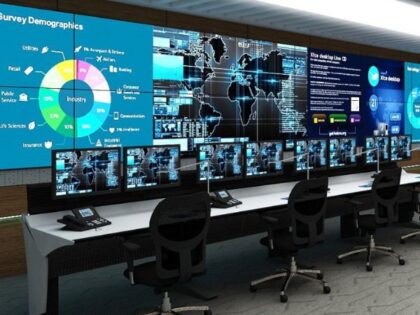


Sports arenas are more than venues where people come together to watch a match. They are large spaces where organisers, sponsors, advertisers and venue operators need to communicate with thousands of visitors. From sharing event information to displaying promotional messages, visual communication plays an important role in the overall venue experience.
This is where LED signage for sports arenas can be useful. LED displays allow venues to present digital content across different areas, helping communicate information and promotional messages to spectators.
Whether installed inside an arena or on an outdoor building facade, LED signage can support different communication requirements depending on the display type, location and content strategy.
1. Displaying Advertising and Sponsor Messages
Advertising is an important part of commercial activity in sports venues. Sponsors and advertising partners often need visible spaces to communicate their brands to spectators.
LED signage can provide a digital platform for displaying:
- Sponsor logos and promotional messages.
- Brand campaigns and advertisements.
- Partner announcements.
- Event-related promotional content.
Unlike static promotional material, digital displays allow content to be changed according to the venue’s communication schedule. This gives venue operators flexibility when managing different advertising requirements.
2. Sharing Event Announcements and Venue Information
Sports arenas need to communicate useful information to visitors before, during and after events.
LED displays can be used to present:
- Match schedules and event timings.
- General venue announcements.
- Entry and exit information.
- Visitor instructions.
- Important event updates.
The placement of these displays should be planned according to where visitors need information. For example, entrances, concourses and common areas may have different communication requirements.
3. Supporting the Spectator Experience
Visual displays can contribute to how spectators experience a sporting event. They can present event-related visuals, promotional content and other information that keeps visitors informed.
Depending on the venue’s display arrangement, LED screens may be used for:
- Event graphics and branding.
- Team-related promotional content.
- Match-related information.
- Pre-event and interval announcements.
- Sponsored visual content.
The type of content should suit the audience, event and display location. A clear content strategy helps prevent screens from becoming overcrowded with unrelated messages.
4. Using LED Displays Across Different Areas of a Sports Venue
Not every part of a sports arena has the same display requirements. Indoor and outdoor spaces may need different LED display configurations.
Indoor areas
Indoor LED displays may be suitable for:
- Reception and entrance areas.
- Indoor corridors and concourses.
- Hospitality and lounge spaces.
- Retail and food service areas.
- Indoor advertising locations.
The viewing distance, ambient lighting and available installation space should be considered when selecting an indoor display.
Outdoor areas
Outdoor LED displays may be considered for:
- Building facades.
- External promotional areas.
- Venue entrances.
- Outdoor visitor information points.
Outdoor installations need to account for environmental exposure, visibility, mounting arrangements and other site conditions.
Choosing the appropriate display type depends on where the screen will be installed and how it will be used.
5. Improving Communication for Different Venue Requirements
Large sports venues may serve different audiences, including spectators, visitors, sponsors, staff and business partners. Each group may require different information.
A planned LED signage setup can help organise communication across different venue areas.
For example, an entrance display may focus on visitor information, while a display in a hospitality area may carry sponsor messages or promotional content.
The objective should be to present relevant information in the right place rather than using every display for the same purpose.
6. What Should Sports Venues Consider Before Choosing LED Signage?
Selecting LED signage for a sports arena requires more than deciding on screen size. Venue operators should evaluate the intended use and installation environment before choosing a display solution.
Important considerations include:
Installation location: Determine whether the display will be installed indoors or outdoors and assess the available space.
Viewing distance: Consider how far away spectators or visitors will generally be from the screen.
Ambient lighting: Lighting conditions can influence display visibility and the required configuration.
Content requirements: Decide whether the screen will be used for advertising, announcements, event graphics or a combination of these.
Operating requirements: Consider expected operating hours and the venue’s display usage schedule.
Maintenance access: Ensure the proposed installation allows suitable access for inspection and servicing.
These factors help venue operators identify a display configuration that suits their actual requirements.
7. Choosing an LED Video Wall Solution for Sports Arenas
Different sports venues have different communication and display requirements. A smaller indoor sports facility may need a different arrangement from a large stadium or multi-purpose arena.
Onfinity Technologies Pvt. Ltd. offers LED video wall solutions for indoor and outdoor commercial display applications. The available configurations can be considered according to factors such as installation location, display size and intended application.
Sports arenas are one of the application areas to consider when planning commercial LED display installations. The final selection should be based on the venue’s requirements and the suitability of the proposed display configuration.
Conclusion
LED signage can support advertising, event announcements and visitor communication across different areas of a sports arena. It gives venue operators a flexible digital medium for presenting promotional and informational content.
However, an effective display setup starts with understanding the venue, audience, installation environment and communication objectives. By considering these factors before selecting a solution, sports venues can plan LED signage that supports their day-to-day communication needs.
Frequently Asked Questions
LED signage can be used for advertising, sponsor messages, event announcements, visitor information and other venue communication requirements.
LED displays allow venues to present digital advertisements, sponsor logos and promotional messages. Content can be updated according to the venue’s advertising schedule.
Both types may be suitable, depending on the installation area. Indoor displays are intended for indoor environments, while outdoor displays are designed for external applications and their associated environmental requirements.
Important factors include installation location, viewing distance, ambient lighting, screen size, content requirements, operating hours and maintenance access.
Yes. Depending on its placement and content management arrangement, LED signage can display event schedules, venue announcements, directions and other visitor information.
LED video walls offer a large digital display format that can support advertising, promotional content and visual communication. Their suitability depends on the venue layout and intended application.