

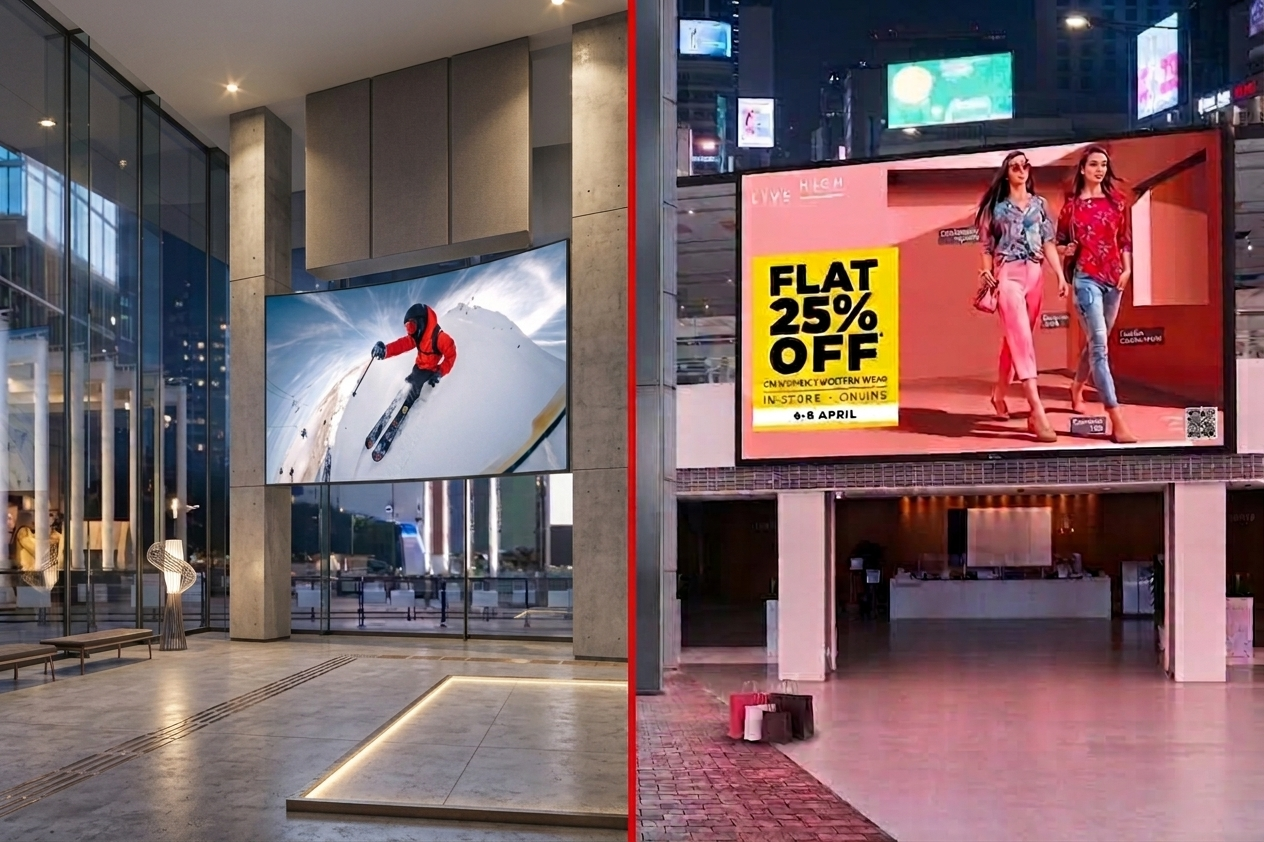
Businesses today use digital displays for much more than advertising. LED screens can help retailers promote products, allow companies to communicate information, enhance events, and create memorable visual experiences. From shopping malls and corporate spaces to sports venues and building facades, the right display can make a significant difference in how people see and interact with your brand.
But choosing an LED display is not simply about selecting the biggest or brightest screen. One of the first decisions is whether your business needs an indoor LED display or an outdoor LED display.
While both use LED technology, they are designed for different environments and viewing conditions. Indoor displays typically operate in controlled spaces, while outdoor displays need to perform under changing light and environmental conditions.
So, which one is right for your business?
The answer depends on where the screen will be installed, how far viewers will be from it, the amount of ambient light, the type of content you want to display, and the conditions the display will experience.
Indoor LED vs Outdoor LED
Indoor LED displays are generally designed for controlled environments such as offices, retail stores, malls, and event spaces. Outdoor LED displays are designed for locations exposed to daylight, moisture, dust, and temperature changes. The right choice depends on your installation environment, viewing distance, brightness needs, content, and protection requirements.
What Is an Indoor LED Display?
An indoor LED display is designed for use inside buildings where environmental conditions can generally be controlled.
These displays can create large, seamless visual surfaces and are useful when businesses want to display high-impact visuals, promotional content, presentations, or information in an indoor environment.
Common Applications for Indoor LED Displays
Indoor LED displays can be used in a wide range of commercial and professional environments, including:
- Retail stores and showrooms
- Shopping malls
- Corporate offices
- Conference and meeting spaces
- Hotels and hospitality venues
- Reception areas
- Control rooms
- Museums and entertainment venues
- Indoor events and exhibitions
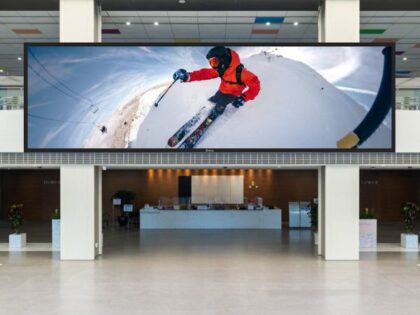
For example, a retail brand could install an indoor LED video wall behind its reception or product display area and use it to showcase campaigns, product videos, and brand content.
Onfinity’s LED Video Wall solutions are positioned for both indoor and outdoor environments, with applications including retail signage, shopping malls, sports arenas, building facades, and command centers. The company also highlights custom sizes and configurations for different installation requirements.
What Is an Outdoor LED Display?
An outdoor LED display is designed for installations where the screen may be exposed to environmental conditions.
Unlike a screen installed inside a controlled building, an outdoor display may have to deal with direct sunlight, rain, dust, temperature fluctuations, and other site-specific conditions.
Common Applications for Outdoor LED Displays
Outdoor LED displays are commonly considered for:
- Outdoor advertising
- Building facades
- Sports venues
- Outdoor events
- Commercial complexes
- Public information displays
- Transportation areas
- Large-scale brand signage
Visibility is particularly important in outdoor applications. A display that performs well inside a controlled environment may not provide the same viewing experience when exposed to strong daylight.
This is why businesses should evaluate brightness, viewing distance, environmental protection, installation conditions, and maintenance requirements before choosing an outdoor LED display.
When considering protection against dust and water, businesses should review the manufacturer’s stated IP rating and confirm that it is appropriate for the intended environment. IEC 60529 defines the IP Code classification system for the degree of protection provided by enclosures.
Indoor LED vs Outdoor LED: Key Differences
The two display types may look similar at first, but their requirements can be quite different.
| Factor | Indoor LED | Outdoor LED |
|---|---|---|
| Installation | Controlled indoor spaces | Outdoor or exposed locations |
| Lighting | Usually controlled ambient lighting | May face strong daylight |
| Environmental exposure | Generally protected | May face rain, dust, heat, and temperature changes |
| Viewing distance | Often closer | Often farther away |
| Brightness considerations | Based on indoor lighting conditions | Strongly influenced by daylight and installation conditions |
| Protection requirements | Usually less demanding | Greater attention to environmental protection |
| Typical applications | Offices, retail, malls, hotels, events | Advertising, facades, stadiums, outdoor events |
| Key selection factors | Image quality, viewing distance, content | Visibility, environment, viewing distance, protection |
There is no universal winner between indoor and outdoor LED. The better choice is the one that matches your actual application.
Brightness and Visibility
Brightness is an important consideration when comparing indoor LED vs outdoor LED.
Indoor displays usually operate under more predictable lighting conditions. However, not every indoor space has low ambient light. For example, a storefront with large windows may receive significant daylight.
Outdoor displays have an additional challenge because they may need to remain clearly visible in direct or strong daylight.
Therefore, instead of assuming that every outdoor display simply needs the highest possible brightness, businesses should consider:
- Direct sunlight exposure
- Screen orientation
- Time of day
- Surrounding lighting
- Viewing distance
- Content type
- Brightness control features, where available
The goal is to select a display that provides sufficient visibility for the actual installation without paying for specifications that may not be necessary.
Weather and Environmental Protection
Environmental conditions are one of the clearest differences between indoor and outdoor applications.
An indoor display installed inside an office, mall, or showroom is normally protected from rain and direct weather exposure.
An outdoor display may be exposed to:
- Rain and moisture
- Dust
- Direct sunlight
- Heat
- Cold temperatures
- Wind
- Outdoor pollution
- Regular cleaning requirements
This makes enclosure protection an important consideration.
The IP rating provides a standardized way of describing the protection offered by an enclosure against the ingress of solids and water. However, businesses should not choose an outdoor display based on an IP number alone. The required protection should be matched to the actual installation conditions and the manufacturer’s specifications.
Pixel Pitch and Viewing Distance
Pixel pitch is another important factor when choosing an LED video wall.
It refers to the distance between the centers of adjacent pixels. In practical terms, pixel pitch helps determine how close viewers can be to the display while still experiencing the desired image quality.
For example, an LED display installed in a corporate meeting space may be viewed from a relatively short distance. A large outdoor display on a building, on the other hand, may be viewed from much farther away.
A useful starting point is:
- Closer viewing distance: pay greater attention to pixel pitch and image detail.
- Longer viewing distance: screen size, visibility, and overall viewing conditions become increasingly important.
However, a smaller pixel pitch is not automatically the best choice for every project. Businesses should consider viewing distance, screen dimensions, content, and budget together.
Screen Size
Screen size should be determined by the viewing environment and purpose rather than simply choosing the largest available display.
Consider two different examples.
Retail showroom: A retail brand wants a large display behind its product area. Customers may stand only a few metres away, so image detail and the relationship between screen size and viewing distance are important.
Building facade: A company wants a large LED display on the exterior of a commercial building. People may view the screen from a road, parking area, or nearby public space.
The second installation may require a substantially different configuration because the screen needs to communicate effectively over a greater viewing distance.
Content and Business Use Case
Your content strategy should also influence your LED display choice.
Indoor LED applications may include:
- Product presentations
- Brand storytelling
- Corporate communication
- Retail promotions
- Event presentations
- Digital experiences
- Indoor advertising
Outdoor LED applications may include:
- Advertising campaigns
- Sports content
- Event promotions
- Public information
- Building signage
- Large-scale brand messaging
Before selecting hardware, define what you want the display to accomplish. The intended content, operating environment, and viewing conditions should all be considered when choosing commercial signage.
Is Indoor LED or Outdoor LED More Expensive?
There is no fixed answer because the total project cost depends on much more than whether the display is indoor or outdoor.
Factors that can affect the overall investment include:
- Screen size
- Pixel pitch
- Brightness requirements
- Cabinet design
- Mounting structure
- Installation complexity
- Control system
- Power requirements
- Environmental protection
- Maintenance access
- Content management requirements
Outdoor installations can involve additional environmental protection and structural considerations, but the final cost should be evaluated on a project-by-project basis.
Instead of comparing only the purchase price, businesses should consider the total cost of ownership, including installation, operation, maintenance, and expected usage.
Commercial signage can also differ in operating capabilities and construction. Businesses should review manufacturer specifications and energy requirements when comparing display solutions.
Indoor vs Outdoor LED: Maintenance Considerations
Maintenance is often overlooked when businesses plan an LED display project.
Indoor displays are generally protected from rain and outdoor contaminants, although displays in busy public areas can still require regular cleaning and servicing.
Outdoor displays may require additional attention because their installation environment can expose them to dust, moisture, heat, and other conditions.
Key Maintenance Questions to Ask
Before installation, consider:
- How easy is it to access the display for servicing?
- Can individual components be replaced if necessary?
- What environmental conditions will the display experience?
- How frequently will cleaning be required?
- What maintenance support is available?
- What operating schedule is expected?
Planning these factors in advance can make ongoing display management easier and help businesses avoid unexpected maintenance challenges.
How to Choose the Right LED Display for Your Business
If you’re still deciding between an indoor LED video wall and an outdoor LED display, use this step-by-step approach.
Step 1: Identify the Installation Environment
First, determine exactly where the display will be installed.
Ask:
- Is it fully indoors?
- Is it outdoors?
- Is it semi-covered?
- Will it be near windows?
- Will it experience direct sunlight?
- Will it be exposed to rain or dust?
Don’t classify an installation simply as “indoor” or “outdoor” without considering the actual conditions.
Step 2: Determine the Typical Viewing Distance
Measure the distance between the display and the people who will normally view it.
A display in a meeting room may have a relatively short viewing distance, while a large advertising screen may be viewed from much farther away.
This information can help determine the appropriate screen size and pixel pitch.
Step 3: Evaluate Ambient Light
Consider the lighting conditions throughout the day.
For outdoor installations, think about:
- Morning sunlight
- Midday sunlight
- Evening conditions
- Screen orientation
- Nearby reflective surfaces
For indoor installations, consider windows, artificial lighting, and glare.
Step 4: Define Your Content
Decide what the display will show.
Will it primarily display:
- Text?
- Images?
- Videos?
- Advertisements?
- Presentations?
- Live feeds?
- Product information?
- Dynamic data?
Your content requirements can influence screen resolution, pixel pitch, size, and viewing experience.
Step 5: Consider Installation and Maintenance
Finally, evaluate the practical side of the project.
Review:
- Mounting requirements
- Available power
- Structural considerations
- Ventilation
- Service access
- Environmental protection
- Operating schedule
- Content management
- Long-term maintenance
A display should be selected as part of the complete installation rather than as a standalone piece of hardware.
Which LED Display Is Right for Different Businesses?
Different businesses have different display requirements.
Retail Stores
Indoor LED displays can work well for product promotions, brand messaging, and immersive visual experiences.
For stores with exterior-facing displays or outdoor advertising requirements, an outdoor solution may be more appropriate depending on the installation conditions.
Shopping Malls
Indoor LED video walls can be used in atriums, corridors, entrances, and promotional areas.
Outdoor LED displays may be suitable for exterior facades, entrances, or advertising areas where the display is exposed to outdoor conditions.
Corporate Offices
Indoor LED displays can support presentations, internal communications, reception areas, boardrooms, and collaboration spaces.
The key considerations are typically viewing distance, image quality, screen size, content, and room lighting.
Sports Venues
Large LED displays can support scoreboards, advertising, live video, event information, and audience engagement.
Outdoor or semi-outdoor installations require careful evaluation of daylight visibility and environmental conditions.
Building Facades
For large-scale exterior communication, outdoor LED displays can provide highly visible digital signage.
Here, businesses should pay particular attention to brightness, viewing distance, environmental protection, structural installation, and applicable local requirements.
How Onfinity Can Help You Choose the Right LED Display
Selecting an LED video wall should begin with the business requirement rather than a specific product specification.
Onfinity provides LED Video Wall solutions for both indoor and outdoor environments. Its listed applications include command centers, retail signage, shopping malls, sports arenas, and building facades, along with custom sizes and configurations.
When planning an LED display project, the right solution should be evaluated according to:
- Installation environment
- Viewing distance
- Screen size
- Brightness requirements
- Pixel pitch
- Content type
- Environmental exposure
- Installation requirements
- Maintenance needs
Discussing these requirements with a display specialist can help businesses select a configuration that fits the intended application instead of paying for specifications they may not need.
Indoor LED vs Outdoor LED: Which One Should You Choose?
The simplest answer is to match the display to its environment.
Choose an Indoor LED Display When
- The display will be installed inside a building.
- Environmental conditions are controlled.
- Viewers will be relatively close.
- You need a large visual surface for retail, corporate, hospitality, or events.
- Indoor lighting is the primary visibility consideration.
Choose an Outdoor LED Display When
- The display will be installed outdoors or in an exposed location.
- Strong daylight can affect visibility.
- The screen may experience rain, dust, heat, or temperature changes.
- Viewers will typically be farther away.
- The display is intended for outdoor advertising, events, sports, facades, or public communication.
What About Semi-Outdoor Locations?
Some installations fall somewhere between the two.
Consider a shopping center entrance, covered outdoor walkway, transport hub, stadium entrance, or partially enclosed commercial area.
In these situations, don’t choose a display simply because the screen is technically under a roof.
Instead, evaluate:
- Exposure to sunlight
- Rain and moisture
- Dust
- Viewing distance
- Ambient temperature
- Screen orientation
- Required brightness
- Maintenance access
The actual environment should determine the display requirements.
Final Thoughts
When comparing indoor LED vs outdoor LED, there is no single option that is best for every business.
An indoor LED display can be an excellent choice for controlled environments such as retail stores, shopping malls, offices, conference spaces, hotels, and indoor events.
An outdoor LED display can be better suited to applications where the screen must remain visible in daylight and operate in an environment with greater exposure to weather and other outdoor conditions.
The best decision starts with the basics: Where will the display be installed? How far away will viewers be? What content will you show? How much ambient light is present? What environmental conditions will the screen face?
Once these questions are answered, you can select the appropriate screen size, pixel pitch, brightness, protection, and configuration for your project.
If you’re planning an LED video wall for your business, explore Onfinity’s LED Video Wall solutions and discuss your indoor or outdoor display requirements with the team.
The main difference is the environment they are designed to operate in. Indoor LED displays are generally intended for controlled indoor spaces, while outdoor LED displays are designed for installations that may experience stronger daylight and outdoor environmental conditions.
An indoor LED display should not automatically be considered suitable for outdoor use. Outdoor installations require a display configuration appropriate for the expected sunlight, moisture, dust, temperature, and other environmental conditions.
Outdoor LED displays often need greater visibility in daylight, particularly when exposed to strong sunlight. However, the appropriate brightness depends on the actual installation conditions, screen orientation, ambient light, viewing distance, and manufacturer specifications.
It depends on where the display will be installed. An LED display inside a mall atrium or corridor will generally have different requirements from a display mounted on an exterior facade or outdoor entrance.
Pixel pitch is the distance between the centers of adjacent pixels. It is an important factor in determining the suitable viewing distance and image-detail requirements of an LED display.
There is no single IP rating that is suitable for every outdoor installation. The appropriate protection depends on the site’s exposure to water, dust, and other environmental conditions. Businesses should review the manufacturer’s specifications and the applicable IP classification under IEC 60529.
Not necessarily. Total cost depends on factors such as screen size, pixel pitch, brightness, installation, structural requirements, environmental protection, control systems, and maintenance. Outdoor projects can involve additional requirements, but pricing should be evaluated based on the complete project.
Start by evaluating the installation environment, viewing distance, ambient light, content, screen size, environmental exposure, installation requirements, and maintenance needs. These factors can help determine whether an indoor or outdoor LED solution is more appropriate.


1 Comment